5 Awesome LobeChat Alternatives
 Yulei Chen
LobeChat is an open-source AI chat framework that lets you interact with multiple AI models through a polished, customizable interface. It supports plugins, multi-agent workflows, and a built-in agent marketplace. LobeChat's cloud offering (LobeHub) starts at $9.90/month for 5 million credits, with premium plans going up to $39.90/month. The self-hosted Community Edition is completely free, so you only pay for hosting and API costs. You can self-host LobeChat on Sliplane for just €9/month with one click, zero server management, and predictable pricing.
But LobeChat might not be the perfect fit for everyone. Maybe you need better local model support, a simpler interface, RAG capabilities, or a tool that focuses purely on privacy. Here are 5 awesome alternatives worth checking out.
1. Open WebUI
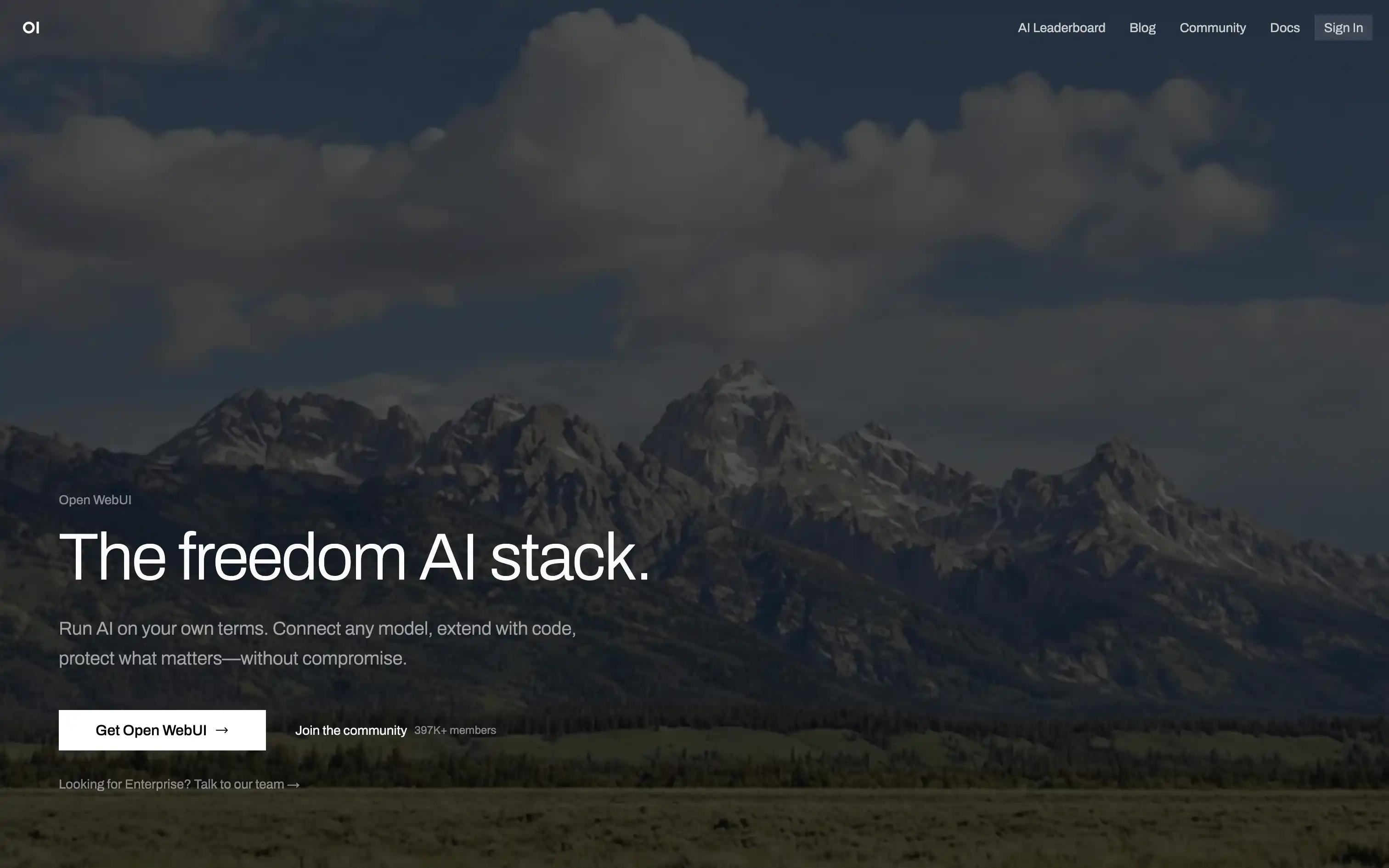
Open WebUI is one of the most popular self-hosted AI chat platforms, with over 282 million Docker pulls. It provides a familiar ChatGPT-like interface that connects to local models via Ollama or to any OpenAI-compatible API. Where LobeChat focuses on multi-agent workflows and plugins, Open WebUI shines with its built-in document chat (RAG), pipeline system, and robust multi-user management.
- Features: ChatGPT-style interface, built-in RAG for document chat, Ollama integration, OpenAI-compatible API support, multi-user with RBAC, custom pipelines, model management, web search, image generation, voice input/output, and plugin support.
- Why You Should Use It: If you want a self-hosted ChatGPT replacement that works out of the box with local models, Open WebUI is hard to beat. The built-in RAG lets you chat with your documents without extra setup, and the pipeline system allows custom processing steps. It also has the largest community of any open-source AI chat interface.
- Why Not: Open WebUI is heavier than LobeChat and requires more resources. The UI is less customizable than LobeChat's theming system. It lacks LobeChat's multi-agent collaboration features and agent marketplace.
- Pricing: Completely free and open-source for self-hosting. No user limits or feature restrictions. Enterprise licensing is available for white-labeling and commercial redistribution. Self-hosting costs as little as €9/month on Sliplane.
2. LibreChat
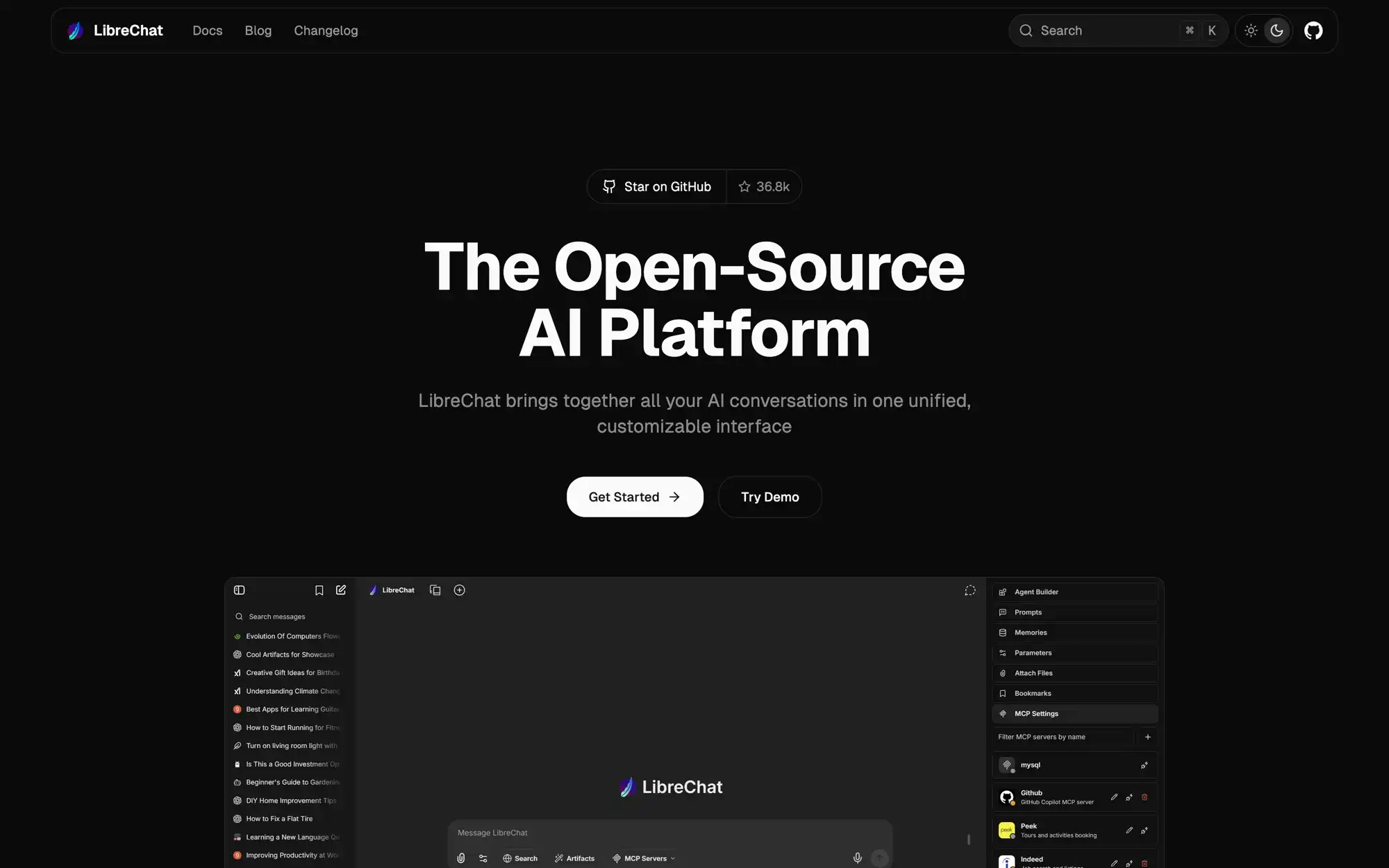
LibreChat is a free, open-source AI chat platform that unifies multiple AI providers under one interface. It supports agents, a code interpreter, multimodal capabilities, and integrations with OpenAI, Anthropic, Google, and many more. While LobeChat emphasizes its agent marketplace, LibreChat focuses on being a powerful, unified gateway to all your AI models with advanced features like conversation branching.
- Features: Multi-provider support (OpenAI, Anthropic, Google, Azure, AWS Bedrock, and more), agents with tool use, code interpreter, conversation branching and forking, message search, prompt templates, file uploads, multi-user support, and customizable UI presets.
- Why You Should Use It: If you use multiple AI providers and want one interface to rule them all, LibreChat is excellent. The conversation branching feature lets you explore different response paths without losing context. It also supports the widest range of AI providers out of any open-source chat UI.
- Why Not: LibreChat requires MongoDB and Meilisearch for a full setup, making it heavier to self-host than LobeChat's single-container deployment. It doesn't have LobeChat's polished agent marketplace or multi-agent collaboration features.
- Pricing: Completely free and open-source (MIT license). No subscriptions or restrictions. You only pay for your hosting infrastructure and AI API usage. Self-hosting on a VPS starts at around €9/month.
3. AnythingLLM
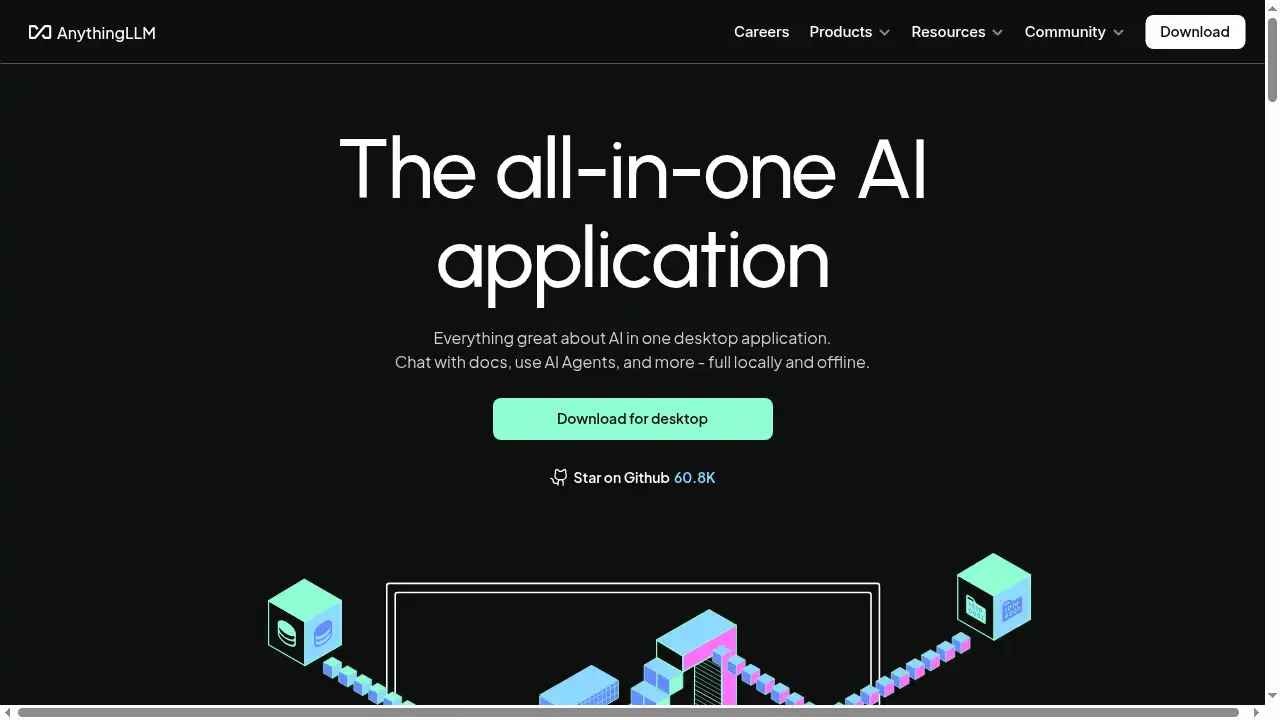
AnythingLLM is an all-in-one AI application that lets you chat with your documents, build AI agents, and run LLMs privately. Where LobeChat is primarily a chat interface with plugin support, AnythingLLM is built from the ground up as a RAG platform, making it the go-to choice for teams that need to work with their own data.
- Features: Full RAG pipeline with document ingestion (PDF, DOCX, TXT, and more), support for 30+ LLM providers, AI agents with custom tools, multi-user workspaces with permissions, built-in vector database, web scraping, API access, and both desktop and Docker deployment options.
- Why You Should Use It: If your primary use case is chatting with documents and building knowledge bases, AnythingLLM is purpose-built for this. The built-in vector database means no extra infrastructure, and the workspace system lets teams organize documents and conversations by project. The desktop app is also great for individual use without any server setup.
- Why Not: AnythingLLM's chat interface is more functional than polished compared to LobeChat's sleek UI. It lacks LobeChat's agent marketplace and multi-agent collaboration. The cloud hosting starts at $50/month, which is significantly more expensive than LobeChat's cloud plans.
- Pricing: Desktop app is completely free. Cloud hosting starts at $50/month for managed instances. Self-hosting via Docker is free. Self-hosting on Sliplane costs just €9/month.
4. Jan
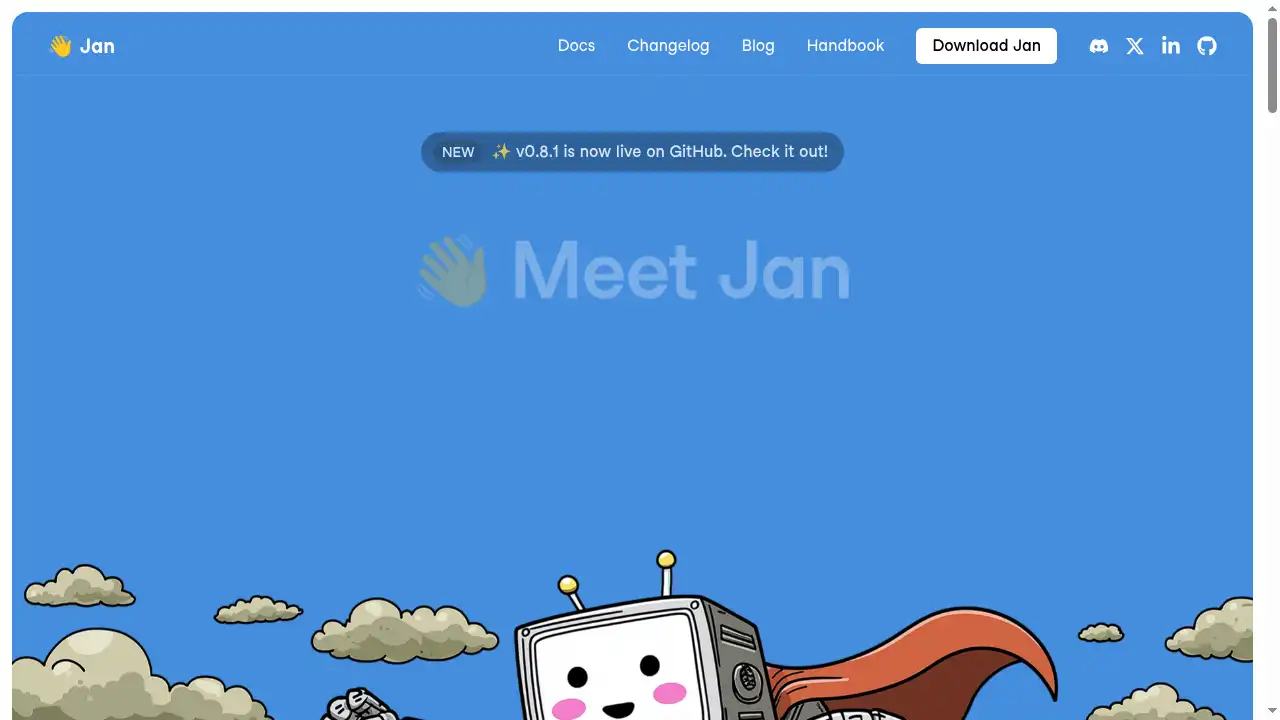
Jan is an open-source desktop AI assistant that runs 100% offline on your local machine. While LobeChat is a web-first platform designed for cloud and self-hosted deployments, Jan takes the opposite approach: it's a native desktop app built for complete privacy with local-first AI inference.
- Features: Local AI inference on your own hardware, support for popular models (Llama, Qwen, DeepSeek, Mistral, Gemma), one-click model downloads from Hugging Face, OpenAI-compatible local API server, cloud model connections (GPT, Claude, Gemini), cross-platform desktop app (Windows, macOS, Linux), and offline capability.
- Why You Should Use It: If privacy is your top priority and you want AI that never sends data to the cloud, Jan is the best choice. It runs entirely on your device with no internet required after downloading models. The local API server also makes it a great backend for other tools that need an OpenAI-compatible endpoint.
- Why Not: Jan is a desktop-only application, so there's no web interface or multi-user support. You need decent hardware (at least 8GB RAM, ideally a GPU) to run local models at reasonable speeds. It lacks LobeChat's plugins, agent marketplace, and collaborative features.
- Pricing: Completely free and open-source (MIT license). No subscriptions, no API fees for local models. You only pay if you choose to connect cloud model providers like OpenAI or Anthropic.
5. NextChat
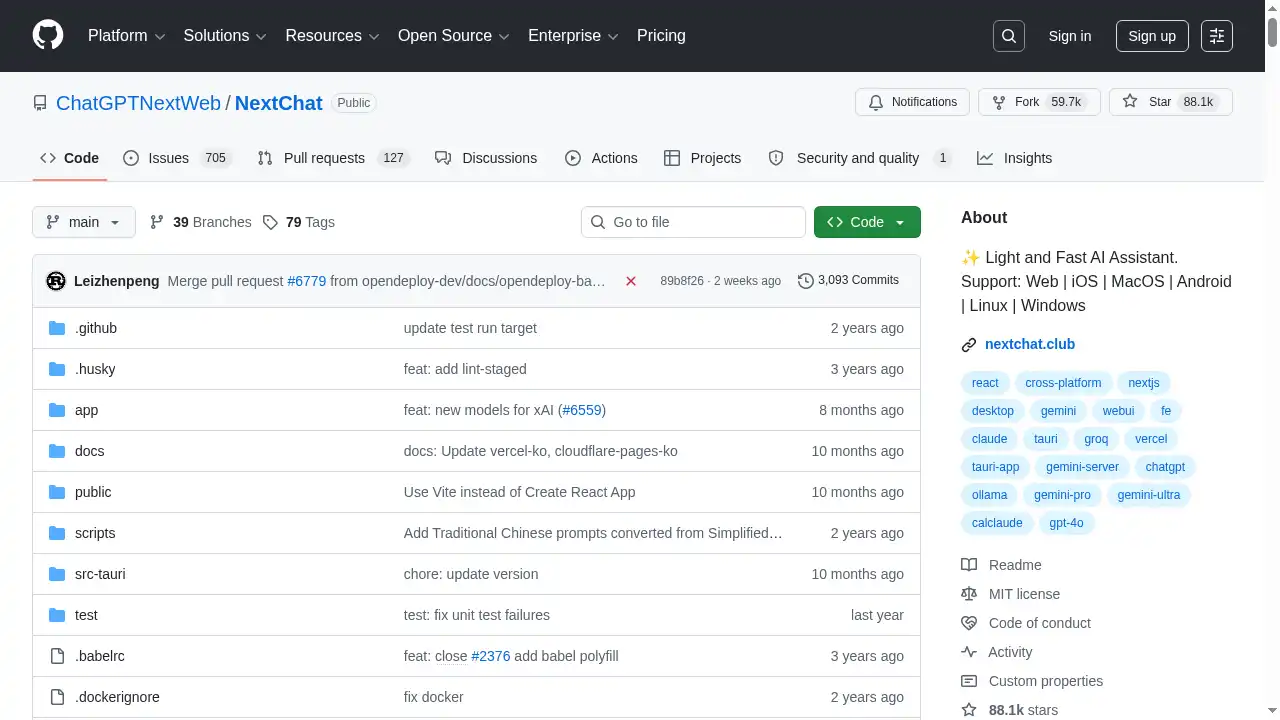
NextChat (formerly ChatGPT-Next-Web) is a lightweight, fast AI chat client with over 88,000 GitHub stars. It takes a minimalist approach compared to LobeChat's feature-rich platform: bring your own API keys, deploy in seconds, and start chatting. The entire client is under 5MB.
- Features: Support for multiple AI providers (OpenAI, Claude, Gemini, DeepSeek), "Masks" system for custom AI personas and prompt templates, one-click deployment on Vercel, cross-platform apps (Web, iOS, Android, macOS, Windows, Linux), markdown rendering with LaTeX and Mermaid, conversation export, and local data storage for privacy.
- Why You Should Use It: If you want the lightest possible AI chat interface that you can deploy in under a minute, NextChat is perfect. The one-click Vercel deployment means zero infrastructure management. Its "Masks" feature offers similar functionality to LobeChat's agents but with a simpler, more streamlined approach. Great for individuals who just want a clean, fast chat UI.
- Why Not: NextChat is a thin client with no built-in RAG, no multi-user support, and no plugin ecosystem. It requires you to bring your own API keys for everything. There's no local model support without a separate backend like Ollama. It's much simpler than LobeChat in terms of features.
- Pricing: Free and open-source (MIT license). Bring your own API keys and pay only for usage. One user reports spending about $0.30/month with moderate use. Self-hosting or Vercel deployment is free.
Conclusion
| Tool | Best For | Ease of Setup | Focus | Cloud Pricing |
|---|---|---|---|---|
| LobeChat | Multi-agent workflows, plugins | Easy | Agent ecosystem | LobeHub $9.90-39.90/mo |
| Open WebUI | Self-hosted ChatGPT replacement | Easy | Document chat, RAG | Free self-host, enterprise on request |
| LibreChat | Multi-provider unified interface | Moderate | Provider aggregation | Free (MIT, self-host only) |
| AnythingLLM | Document RAG, knowledge bases | Easy | RAG platform | Cloud from $50/mo |
| Jan | Privacy-first, offline AI | Very Easy | Local inference | Free (desktop only) |
| NextChat | Lightweight, fast deployment | Very Easy | Minimal chat client | Free (BYOK) |
Each alternative fills a different niche: Open WebUI for a full-featured self-hosted ChatGPT experience, LibreChat for unifying multiple AI providers, AnythingLLM for document-based RAG workflows, Jan for completely offline and private AI, and NextChat for the lightest possible deployment.
LobeChat remains a strong choice if you want a polished agent ecosystem with plugin support and multi-agent collaboration. But if your priorities lean more toward document chat, privacy, simplicity, or provider flexibility, one of these alternatives might be a better fit.
If you're looking for more AI tool comparisons, check out these related posts: